Learning to draw the map
None of us arrives anywhere alone

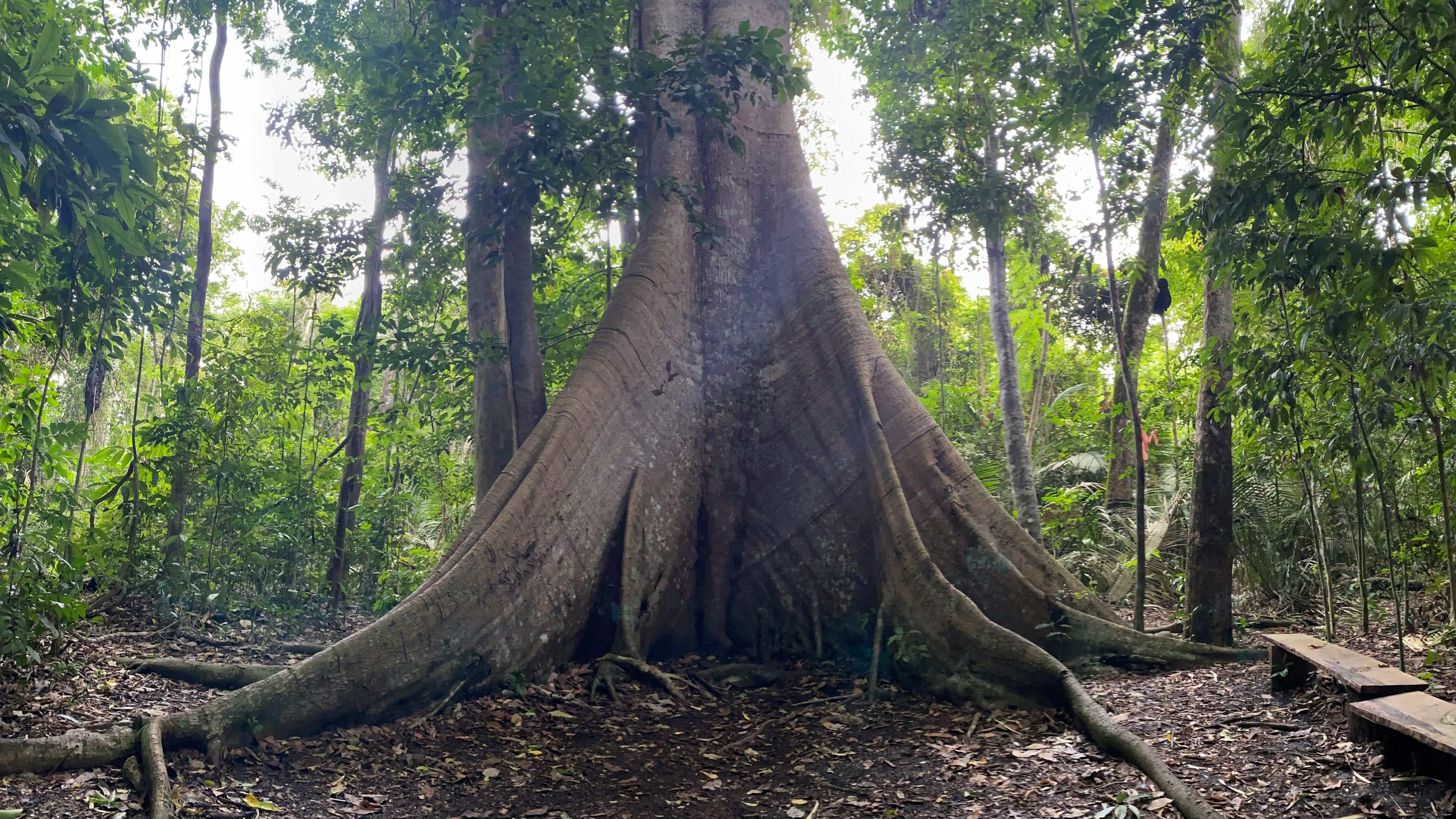
Image credit: Photo by Leandro Ramos on Unsplash
A few nights ago, I sat across the table from my professor at dinner. He and his wife were visiting the city nearly a decade after their last trip. He grew up here, and his memories — of street names, college canteens, the old trees and Victorian buildings — are still so vivid it’s hard to believe he hasn’t called this place home in years. He was in town to meet old friends and mentors, people who had shaped his path in one way or another. In between all of that, he made time — despite his many commitments — to meet with me and my family.
As we talked over dinner, I found myself listening more than speaking. There was something grounding about being in his company again — his ease, his curiosity, the way he still spoke about ideas with the same generosity he brought to teaching years ago. Somewhere between the main course and the dessert, I realised how much I hold him, and all my teachers, in quiet reverence.
And maybe that’s where this reflection really begins. It struck me then, how gratitude arrives — not in the grand moments of achievement, but in these small, steady recognitions that we have been seen and guided along the way. I’ll have to go back a little for all of this to make sense. So here we go.
I wasn’t born into a rich family, and my parents weren’t the kinds who indulged our whims and fancies. We lived a good life with the little that they made. What they did indulge us in, though, was books. We were surrounded by them — stacked on tables, crammed into cupboards, passed between cousins — so it was only natural to lean on them for entertainment, for wisdom, and for learning. No one imagined then that I would make books my livelihood. They were companions, not a career. But they also shaped the way I saw the world — as something to be read carefully, word by word.
You might be wondering what all this is leading to. Well, since this Substack is called Insights, allow me to draw you into one.
My father and mother, as you might guess from the lines above, were not born with silver spoons in their mouths, but they carried themselves with a quiet integrity that drew people to them. They worked hard, spoke plainly, and were trusted by those who mattered. Because of that, our home often became a meeting place for people who thought and led: priests, civil servants, writers, journalists. I remember so distinctly when Nambi Narayanan visited us. I was older then and knew quite instantly who he was and the significance of his visit. Over the years, what my parents accumulated was not wealth, but a remarkable circle of relationships — people who brought with them different ways of seeing and thinking about the world.
My father, especially, had an unshakable curiosity. He was young, idealistic, with a vein of red running through him — not blood, but belief. He admired those who dreamed of a fairer world, who spoke of equality and dignity with fire in their throats. Many of his mentors were men of the Left — the kind who argued about Marx and the working class with such conviction that it could strip paint. They would often guide him, connect him to others who shared his passions. It didn’t matter what he was looking for, even if it was particular variety of a plant or a rare book or a tool, someone would always appear, as if the universe had a quiet network of good people who looked out for one another.
And that, I think, is the insight worth sitting with today.
For a long time, I took it for granted — that people would watch out for one another. That there would always be someone a little older, a little wiser, ready to nudge you forward. It was how life seemed to work: one hand reaching back while the other reached ahead. My parents lived in that faith. They helped others, and others helped them. It was less about transactions and more about continuity — the passing of trust, knowledge, and small kindnesses across generations.
It’s easy, in hindsight, to see how much that mattered. For my parents, having people who watched out for them was ordinary, almost expected. It was part of how life worked: someone older guided someone younger; someone wiser gave time to someone learning. I grew up assuming that’s how the world would always be.
Years later, when I found myself at the university, my professors took on that role for me. They taught with a kind of care that was not sentimental, but exacting. Their affection came disguised as rigour. They could sense, even before I did, that there were corners of my intellect I was unwilling to explore, places where I preferred comfort over challenge. With the right amount of nudging — sometimes gentle, sometimes maddeningly persistent — they made me go there.
And when I did, I found something I hadn’t known I was carrying: a deeper capacity for thought, for precision, for language itself. They drew it out not with flattery or reassurance, but with expectation. They believed that the best way to honour a student was not to make things easier for them, but to hold them to their potential.
This path, as I see it now, was leading toward experiences far more spectacular than I could have imagined. They helped me build them — piece by piece, word by word — until they became my own. Along the way, they also opened the larger world to me. They’d invite those same officers, writers, journalists, and thinkers — the kinds of people who had once visited my parents’ home — to take note of me. Sometimes they’d do it quietly, with a recommendation; sometimes by simply placing me in a room where conversations were already happening. Slowly, I was being invited into those conversations myself.
It was not ambition they gave me, but access — the kind of access that comes from being believed in. The kind that turns potential into presence.
It’s almost a game now, tracing the line of influence backward — from the work I do today, to the professors who demanded more of me than I thought I could give, to my parents who believed books could be both compass and companion. Gratitude, when followed backward, begins to feel like a genealogy — not of blood, but of attention. Every person who stopped to watch out for me is part of that chain.
And perhaps this is the real architecture of growth: a network of mutuality, to borrow from Martin Luther King Jr., an unspoken agreement that we rise through the steady hands of others. The Buddhists might call it dependent origination — nothing comes into being by itself. My professors, in their way, were part of that web. They introduced me to others — people who widened my field of vision, who invited me into rooms where conversations were already underway.
This is the pattern I first observed in my parents’ lives and later experienced in my professors’ care: the quiet faith in human connection, in the idea that growth happens not in isolation but through a chain of people who care enough to see something in you and draw it out. You work, you learn, you falter — and someone says, quietly, keep going. It’s easy to mistake that for luck, but I think it’s a form of inherited grace. That chain, fragile as it sometimes seems today, is what holds the world together. It made me who I am, and I hope, in some small way, I can now be that person for someone else.
Maybe that’s the insight here: that none of us arrives anywhere alone. Every achievement, every skill, every moment of belonging is a long, intricate consequence of someone else’s faith in us.
I suppose that’s what true mentorship does — it doesn’t hand you the map; it teaches you to draw it.
The map I’ve been trying to draw all these years was never mine alone — it was drafted, amended, and handed down, by good people who walked a little ahead and made sure I didn’t lose my way.